How much does it cost to build a quantum computer in 2026?
There is no single build cost because "build a quantum computer" covers everything from an ~$8,900 desktop teaching unit you actually buy, to a complete research-grade Rigetti Novera system (two were ordered for about $5.7 million in 2025, about $2.85 million each), to a multi-billion-dollar corporate programme to develop new hardware. The one thing all three share: nobody hand-builds a useful quantum computer cheaply. The processor needs a dilution refrigerator near absolute zero (or an ultra-high-vacuum ion trap), and that infrastructure, not the chip, dominates the cost.
If you only want to run circuits, you do not need to build anything: a 10,000-shot job on AWS Braket's Rigetti Cepheus costs about $4.55, and IBM's Open Plan is free for up to 10 minutes of QPU time per month. Buying prices are sourced row by row in the full price list; cloud rates verified 7 September 2026.
"How much does it cost to build a quantum computer?" has no single answer because the word build spans three very different projects: buying and running a desktop teaching machine, assembling a research-grade node in a lab, and funding a company-scale R&D programme to develop new hardware. This page separates the three, anchors the lab-build cost to verified figures (the published gap between a bare QPU module and a complete turnkey system), marks quote-only components honestly, and points to the far cheaper alternative of renting cloud access. For buying a finished machine see the quantum computer price list; for the bare processor see the quantum CPU price.
1.Three things "build" can mean
Before pricing anything, separate the three questions hiding inside "build a quantum computer". They are four orders of magnitude apart. The table shows the cost ladder from a teaching unit you buy, through a lab system you assemble, to a corporate programme that develops entirely new hardware.
Table 1: What building a quantum computer costs, by what "build" means (2026)
| What "build" means | What it takes | Cost | Status |
|---|---|---|---|
| Assemble a teaching machine In practice you buy, not build: a room-temperature SpinQ NMR desktop unit (2-3 qubits). The portable Gemini Mini is listed by SpinQ's Japanese retailer Switch Science at ¥1,408,000 including tax, about $8,900 at 158.28 yen to the dollar (ECB, 8 October 2026). Self-building an NMR rig from parts is not a realistic route. | Off-the-shelf buy | ¥1,408,000 (~$8,900) | verified primary |
| Build a research-grade node (in a lab) Start from a superconducting QPU module and add a dilution refrigerator, control electronics, wiring and a shielded facility. Rigetti's Novera bare QPU module (9 qubits) launched in December 2023 at a starting price of $900,000; Rigetti no longer publishes a price. | Assembly / integration | from $900,000 (bare module, 2023) | industry reported |
| Build a complete turnkey system A complete Rigetti Novera system: the 9-qubit processor, a compatible dilution refrigerator and Rigetti's control systems. Rigetti announced purchase orders for two systems totalling approximately $5.7M in September 2025, about $2.85M each. | Assembly / integration | ~$2,850,000 / system | verified primary |
| Buy a full commercial machine outright A complete on-premise D-Wave Advantage2 annealer (4,400+ qubits). Florida Atlantic University signed a $20M agreement to purchase and install one in 2026. | Turnkey purchase | $20,000,000 | verified primary |
| Develop a new quantum computer (R&D programme) Designing and fabricating your own hardware is not a purchase but a multi-year programme spanning R&D, fabrication, manufacturing and staff. IBM committed more than $10 billion over five years in June 2026. | R&D programme | >$10,000,000,000 (5-year programme) | verified primary |
Cost is per machine except the last row, which is IBM's five-year programme commitment. The bare-module figure is the December 2023 Novera launch starting price (no longer published); the complete-system figure divides the approximately $5.7 million of Rigetti's 30 September 2025 purchase orders between its two systems; the D-Wave figure is Florida Atlantic University's January 2026 agreement; the IBM programme figure is IBM's 2 June 2026 announcement. Figures exclude ongoing facilities, helium and staff.
2.Building a research-grade machine: the component stack
The realistic way to "build" a research-scale quantum computer is not to fabricate a processor from silicon, which only a handful of companies and national labs can do, but to buy a QPU module and integrate it with the cryogenics and electronics it needs. The stack is roughly:
- The QPU module. Rigetti's Novera, the company's first commercially available QPU, launched its bare 9-qubit module in December 2023 at a starting price of $900,000. Rigetti no longer publishes that figure, so treat it as a historical floor, not a current quote.
- The dilution refrigerator. Superconducting qubits must sit a few thousandths of a degree above absolute zero. Suppliers such as Bluefors and Quantum Design Oxford (formerly Oxford Instruments NanoScience, which Quantum Design acquired in January 2026) are quote-only, with no public list price. Secondary estimates span a wide range with cooling power, so treat any single number as indicative.
- Control and readout electronics (microwave sources, arbitrary-waveform generators, amplifiers) from vendors such as Quantum Machines, Zurich Instruments or QBlox, also quote-only.
- The facility: RF shielding, vibration isolation, a helium supply and power. This is a building cost, not a catalogue item.
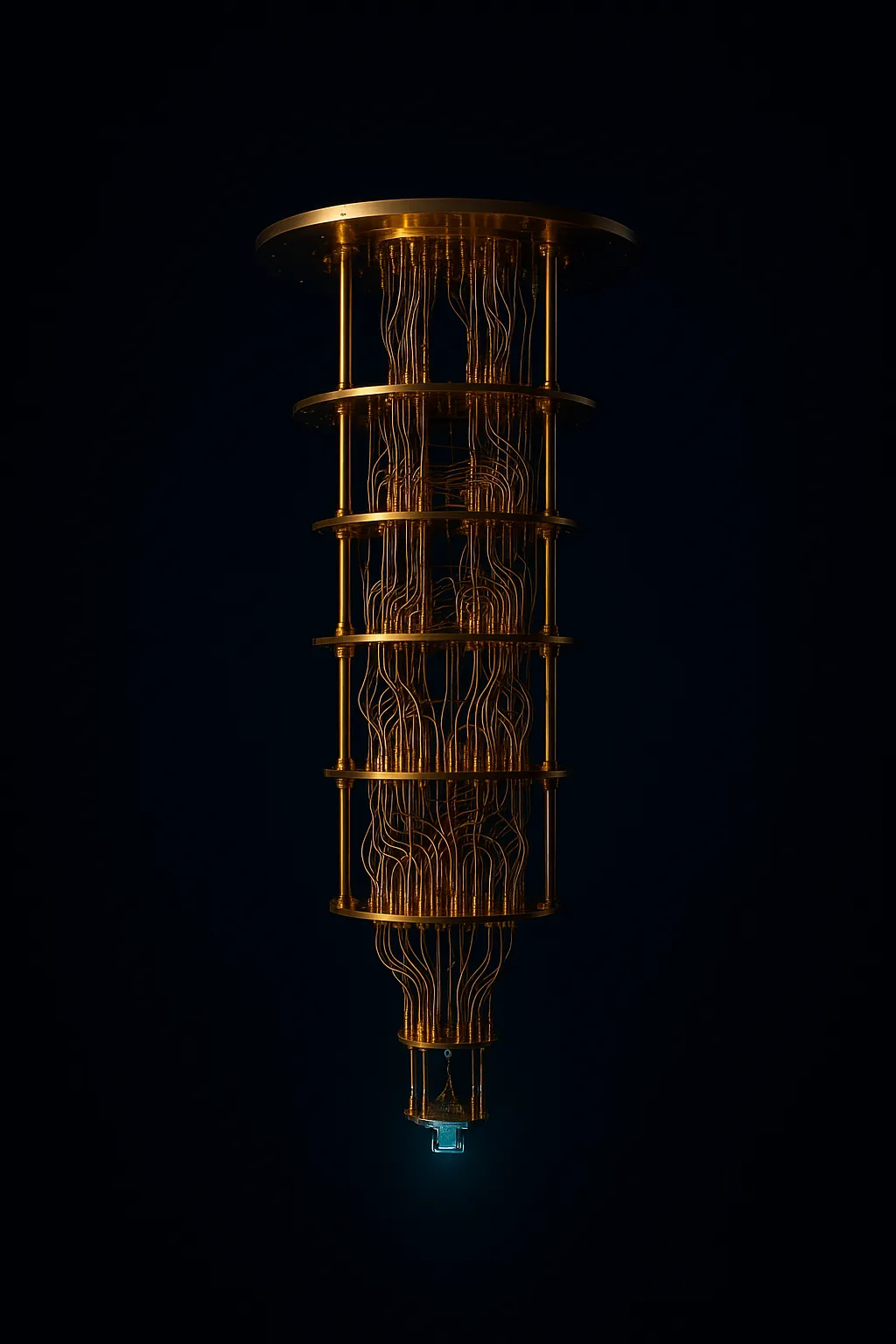
Rather than invent a price for each quote-only component, the honest anchor is a pair of figures Rigetti itself announced. The bare Novera module launched at a starting price of $900,000 (December 2023), and a complete Novera system, which Rigetti describes as the processor plus a compatible dilution refrigerator and its control systems, was the subject of purchase orders for two systems totalling approximately $5.7 million in September 2025, about $2.85 million each. The difference, roughly $1.95 million, approximates what the dilution refrigerator, control systems and integration add when the module becomes a working machine. That is our arithmetic on two published numbers two years apart, not a guess at any single vendor's undisclosed price.
3.Developing new hardware: a programme, not a purchase
Designing and fabricating a genuinely new quantum computer, a new chip architecture, its fabrication process and its full control stack, is not something you cost as a shopping list. It is a multi-year R&D programme. IBM announced on 2 June 2026 that it would commit more than $10 billion over five years to quantum computing, spanning research, manufacturing, acquisitions and ecosystem development. National efforts add more: in May 2026 the US Department of Commerce signed letters of intent to distribute roughly $2 billion in CHIPS funding to nine quantum companies (FedScoop), and finalised the first, up to $375 million for GlobalFoundries, on 8 September 2026 (NIST). If your question is "what would it cost my company to build its own quantum computer from a new design?", the only published reference point is IBM's, a commitment of more than $10 billion over five years, which is exactly why almost everyone buys or rents instead.
4.The cheaper answer for almost everyone: don't build, rent
For all but a handful of organisations that need dedicated, always-on hardware, building or buying makes no economic sense next to cloud access. IBM's Open Plan gives up to 10 minutes of QPU runtime per month for free; a 10,000-shot circuit on AWS Braket's Rigetti Cepheus costs about $4.55; IBM Pay-As-You-Go is $96 per QPU-minute beyond the free tier. In other words, running real 100-plus-qubit hardware for a small project costs a few dollars, against six-to-eight figures to own a machine and the cryogenics, facilities and staff to keep it cold. Estimate a specific job with the cost calculator, or see every provider's rate in the price list.
5.Frequently asked questions
How much does it cost to build a quantum computer?
It depends entirely on what you mean by build. If you want a bench-top teaching machine you buy one, not build it: a SpinQ NMR desktop unit is listed in Japan at ¥1,408,000, about $8,900. If you want to build a research-grade superconducting node in a lab, you start from a QPU module (Rigetti's Novera bare module launched in December 2023 at a starting price of $900,000) and add a dilution refrigerator, control electronics and a shielded facility; Rigetti announced purchase orders in September 2025 for two complete Novera systems, processor plus dilution refrigerator and control systems, totalling approximately $5.7 million, about $2.85 million each, so on those two figures the cryogenics-plus-integration layer comes to roughly $1.95 million. And if you mean develop a new quantum computer as a company, that is an R&D programme measured in billions: IBM alone committed more than $10 billion over five years in June 2026.
How much does it cost to build a quantum computer from scratch?
From scratch, at research scale, the cheapest realistic path is to buy a QPU module and integrate it rather than fabricate a chip yourself. Rigetti's Novera bare module (9 superconducting qubits) launched in December 2023 at a starting price of $900,000; on top of that you need a dilution refrigerator to cool it to near absolute zero, control and readout electronics, cabling and a vibration- and RF-shielded room. Those components are quote-only, but the site's own verified figures bracket the total: a complete Novera system, dilution refrigerator and control systems included, works out at about $2.85 million each from Rigetti's September 2025 purchase orders for two systems totalling approximately $5.7 million, so the integration layer above the bare module's $900,000 starting price is roughly $1.95 million. Fabricating your own processor design from nothing is a different question entirely: that is a company-scale R&D programme, not a shopping list.
Can you build your own quantum computer at home?
Not a useful one. The only quantum computer you can put on a desk is a SpinQ room-temperature NMR unit (2-3 qubits, the Gemini Mini listed in Japan at ¥1,408,000, about $8,900), and that is a finished product you buy rather than assemble. Anything with enough qubits to be interesting uses superconducting or trapped-ion hardware that must sit inside a dilution refrigerator near absolute zero or an ultra-high-vacuum ion trap with laser control, neither of which is a home build. Hobbyists build simulators that run quantum circuits in software on an ordinary PC, but a simulator is not quantum hardware. To run real hardware, renting cloud access is the practical route: IBM's Open Plan is free for up to 10 minutes of QPU time per month.
How much does a dilution refrigerator cost?
Dilution refrigerators, which cool superconducting qubits to a few thousandths of a degree above absolute zero, are quote-only: suppliers such as Bluefors and Quantum Design Oxford (the former Oxford Instruments NanoScience business, sold to Quantum Design in a deal announced in June 2025 and completed in January 2026) publish no list price. Secondary coverage reports a wide range depending on cooling power and qubit capacity, and should be treated as indicative rather than a quote. The honest anchor for the cryogenics-plus-integration cost is the published gap between a bare Rigetti Novera QPU module ($900,000 starting price at its December 2023 launch) and a complete Novera system with dilution refrigerator and control systems (about $2.85 million each in Rigetti's September 2025 orders), which is roughly $1.95 million for the fridge, control electronics, wiring and integration together.
How much do companies spend developing quantum computers?
These are company R&D programmes, not per-machine bills. IBM announced in June 2026 that it would commit more than $10 billion over five years to quantum computing, spanning research, manufacturing, acquisitions and ecosystem work. National programmes add more: in May 2026 the US Department of Commerce signed letters of intent to distribute roughly $2 billion in CHIPS funding to nine quantum companies, and finalised the first of them, up to $375 million for GlobalFoundries, on 8 September 2026. The takeaway is that developing new quantum hardware is a programme-level investment, distinct from the six- and seven-figure cost of buying or assembling a single existing machine.
Is it cheaper to build a quantum computer or rent cloud access?
Renting is dramatically cheaper for almost everyone. Building or buying a single research-grade machine is a six-to-eight-figure capital cost before you add the cryogenic infrastructure, facilities and specialist staff to keep it running. Running a real circuit on the same class of hardware over the cloud is a few dollars: a 10,000-shot circuit on AWS Braket's Rigetti Cepheus costs about $4.55, and IBM's Open Plan is free for up to 10 minutes of QPU time per month. Building only makes sense when you need dedicated, always-on access and can absorb both the purchase and the running cost.
See also: full quantum computer price list · quantum CPU price · desktop quantum computer price · cost calculator · IBM Quantum System Two price · all-provider price reference · methodology. Independent reference, no affiliate revenue. Corrections: oliver@digitalsignet.com.